I'm 45 years old. I train six days a week. I'm stronger now than I was at 35.
That's not a brag — it's a data point. Because the narrative most people carry about fitness after 40 is wrong. The story goes: your body starts falling apart, recovery takes forever, you can't build muscle anymore, and the best you can do is slow the decline.
That narrative is false. And believing it is one of the most expensive mistakes you can make for your long-term health.
Here's the truth: strength training after 40 isn't just possible. For most people, it's more important than it was at 25. The stakes are higher, the benefits are greater, and the cost of not doing it compounds in ways that become very difficult to reverse.
What Actually Changes After 40
I'm not going to pretend nothing changes. Things do change. Understanding what changes — and what doesn't — is the difference between training smart and training frustrated.
Muscle mass naturally declines. Starting around age 30, the body loses approximately 3–5% of muscle mass per decade without active resistance training. By 60, an untrained person may have lost 30% or more of their peak muscle mass. This process is called sarcopenia, and it accelerates with each passing decade if left unaddressed.
The consequences aren't just aesthetic. Less muscle means a slower metabolism, reduced bone density, impaired balance, greater fall risk, slower recovery from illness or injury, and decreased functional independence. Sarcopenia is one of the primary drivers of physical decline in aging — and it is almost entirely preventable with consistent strength training.
Recovery takes longer. This is real. A 45-year-old doesn't bounce back from heavy training the same way a 22-year-old does. Inflammation lingers a bit longer. Connective tissue — tendons and ligaments — needs more time between hard efforts.
This doesn't mean train less. It means train smarter. Prioritize recovery as part of the program, not as an afterthought.
Hormonal changes occur. Testosterone and growth hormone — both critical for muscle building and recovery — naturally decline with age. This doesn't make muscle growth impossible. It makes consistency and smart programming more important.
What doesn't change: your ability to get significantly stronger, build meaningful muscle, improve your body composition, enhance your cardiovascular health, and dramatically improve your quality of life. All of that remains fully available to you at 40, 50, and beyond.
Why the Benefits Are Greater After 40
Here's what most people miss: the return on investment from strength training is actually higher after 40 than it is in your 20s.
At 22, strength training makes you look better and perform better. At 45, strength training does all of that — plus it protects your brain, preserves your independence, reduces your disease risk, improves your sleep, regulates your hormones, and extends the quality years of your life.
The research is compelling and consistent:
Bone density. Resistance training is one of the most effective interventions for maintaining and improving bone density. Osteoporosis — the silent thief that makes bones fragile and fracture-prone — is a major risk factor for serious injury in older adults. Strength training is direct medicine against it.
Metabolic health. Muscle tissue is metabolically active — it burns calories at rest, improves insulin sensitivity, and helps regulate blood sugar. Building and maintaining muscle mass is one of the most powerful interventions for reducing type 2 diabetes risk and managing metabolic health as you age.
Brain health. The cognitive benefits of strength training are increasingly well-documented. Regular resistance exercise supports BDNF (brain-derived neurotrophic factor), reduces neuroinflammation, and appears to reduce the risk of cognitive decline. Combined with cardiovascular exercise and sauna use, strength training becomes part of a comprehensive brain health protocol.
Hormonal regulation. Consistent strength training naturally supports testosterone production, growth hormone release, and cortisol regulation — all of which become more important and more vulnerable after 40.
Mental health. Depression, anxiety, and cognitive decline are significantly reduced in people who strength train consistently. The mental health benefits are dose-dependent — more consistent training produces more consistent benefit.
How Training Changes After 40
The principles of effective training don't change after 40. Progressive overload is still the engine. Compound movements are still the foundation. Consistency is still the most important variable.
What changes is the application.
Warm Up Like You Mean It
At 22, you could walk into the gym cold and start moving heavy weight. At 40+, that's a fast track to injury. A proper warm-up — 10 to 15 minutes of progressive movement that elevates core temperature and mobilizes the joints you're about to load — isn't optional anymore.
Think of it as priming the machine before you run it hard. The machine runs better and lasts longer.
Prioritize Compound Movements
Squat, hinge, push, pull. These four movement patterns cover the majority of what your body needs — and they produce the greatest hormonal and neurological response per unit of effort.
📱 App Demo
💪 Bryant Performing
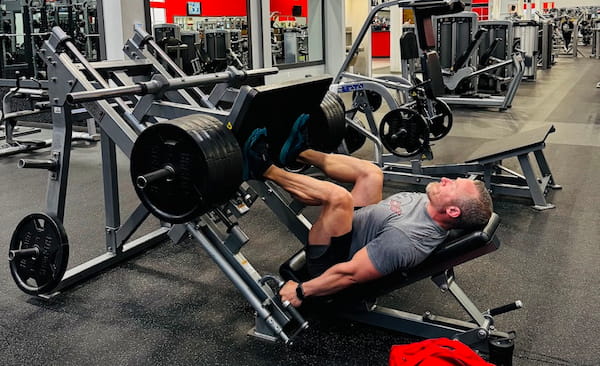
After 40, your training time is precious and your recovery capacity is finite. Don't waste either on exercises that produce marginal results. Compound movements give you the most return for the investment.
Manage Volume and Intensity Intelligently
More is not always better after 40. The relationship between training stress and recovery becomes more delicate. Push too hard for too long without adequate recovery and you accumulate fatigue, increase injury risk, and paradoxically reduce the training stimulus.
This doesn't mean train easy. It means train with intention. Hard sessions followed by adequate recovery. Progressive overload tracked carefully so you're always moving forward without running into the ground.
I use Lyfta to track every session — every weight, every rep, every set. Volume tracking over time tells me whether I'm progressing or accumulating fatigue. The data doesn't lie.
Take Recovery Seriously
Recovery is where adaptation happens. Training is the stimulus. Sleep, nutrition, and active recovery are where the body actually responds to that stimulus by getting stronger.
Sleep 7–9 hours. Non-negotiable. This is when growth hormone is primarily released — skimping on sleep is directly sabotaging your ability to recover and adapt.
Post-workout sauna — 15 to 20 minutes at high heat — reduces inflammation, flushes metabolic waste, and improves circulation to recovering tissue. I use the sauna every single day after training. The difference in next-day soreness and recovery quality is significant.
66%
Lower risk of dementia with 4+ weekly sauna sessions — Finnish study, 20 years
Magnesium glycinate before bed supports muscle relaxation, sleep quality, and hundreds of enzymatic processes involved in recovery. Take it every night.
Protect Your Joints
Connective tissue — tendons and ligaments — adapts more slowly than muscle. This is one of the primary reasons injury rates increase with age for untrained lifters who try to jump back into heavy training too quickly.
The solution is gradual progression and excellent technique. Never sacrifice form for weight. The ego lift that tweaks a shoulder or blows out a knee sets your training back by months. Slow progress maintained consistently beats aggressive progress interrupted by injury every single time.
Foam rolling, targeted mobility work, and the lacrosse ball are not optional accessories at 40+. They're maintenance.
The Program That Works After 40
You don't need a complex program. You need a sustainable one.
Here's the structure I recommend for most people over 40 who are training consistently:
3–4 days of resistance training per week. Full body or upper/lower split. Enough frequency to drive adaptation without overwhelming recovery capacity.
2–3 compound movements per session. Squat or hinge, push, pull. These are the anchors. Everything else is accessory work.
Progressive overload tracked every session. Add weight, reps, or sets systematically over time. If you're not tracking, you're guessing.
1–2 low-intensity cardio sessions per week. Walking, cycling, swimming — sustained effort at a conversational pace. Cardiovascular health without adding excessive recovery demand.
Daily movement. Walk. Take stairs. Avoid sitting for extended periods. Non-exercise activity accumulates significantly and matters for metabolic health.
7–9 hours of sleep. Every night. This is the most important recovery variable and the most commonly neglected.
The Mindset You Need
Here's the thing nobody tells you about strength training after 40: it requires making peace with a different timeline.
You're not training for the summer. You're not training for a high school reunion. You're training for your 60s, your 70s, and the quality of the decades ahead.
That's a longer timeline — and a more meaningful one. The decisions you make in the gym today are investments that compound over time into a body that continues to work for you when you need it most.
I've seen what happens when that investment isn't made. My dad showed me the other side — what physical and cognitive decline looks like when the body isn't maintained. That image drives every training session I do.
You get to choose how you age. Not whether you age — but how. Strength training after 40 is one of the most powerful levers you have.
Pull it. Every single week. For the rest of your life.
That's the Fit Life.